
| |
NanoBioTek, LLC |
About NanoBioTek
NanoBioTek (NBT) is a biotechnology company founded in 2005. NBT is located in Jacksonville, Florida, USA, and its goal is to design and build devices, sensors, and systems aimed at solving biomedical problems such as detecting cancer at its earliest stage.
NBT is currently working on applying AI (artificial intelligence) to accurately diagnose cancer. NBT collaborates with state universities such as the University of Miami and Florida Atlantic University.
Contact: info@nano-bio-tek.com
In the News
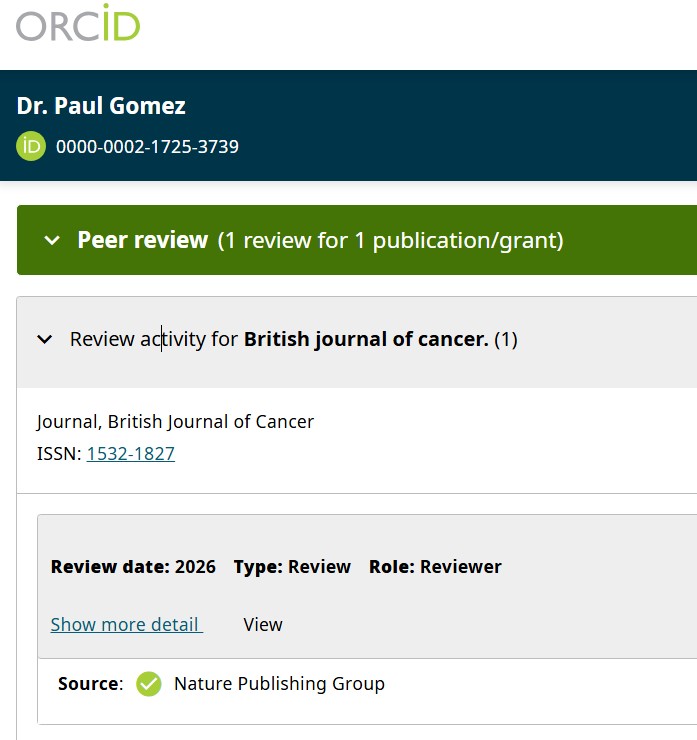
November 20, 2026. Our CEO, Dr. Paul Gomez, has been chosen by the British Journal of Cancer to review their scientific articles. ORCID Profile
Research Progress
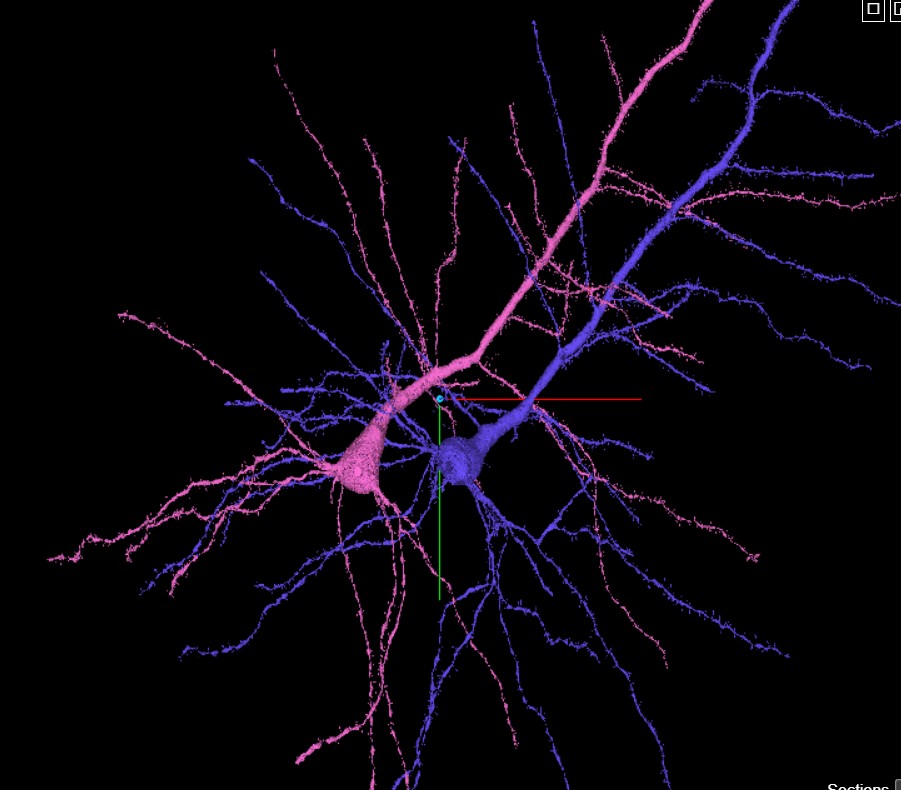
November 27, 2026. We are reporting on the progress of our research in neuroscience, aimed at uncover the fundamentals of working memory. In the image below, we show a pair of reciprocal neurons that have excitatory synapses with each other. The data was extracted from CAVE, a connectome repository developed by MIT and shared publicly. The neurons and their synapses were found in a cubic millimeter of tissue from the temporal lobe of a patient that underwent surgery. We found 90 pairs of neurons connected this way, and this is the main motif we’re looking for. Additional connections are also required, and this is the effort we are undergoing at the moment.
Current Research
October 15, 2026. We are currently working on describing neural data and set-reset flip-flops, which are neural circuits responsible for storing temporary data in the brain, a subsystem known as working memory.


In the News
March 24-27, 2026. Recently Nanobiotek attended a productive, intensive, hands-on workshop on CRISPR-Cas9 technology for gene editing at BioTrac, Germantown, Maryland. Here in the picture is Dr. Paul Gomez with instructor Dr. Serguei Koslov and colleagues.

Cancer Research
NBT is developing sensors to detect cancer at its earliest stage. The main area of research is liquid biopsies, in which nanotechnology is used to capture and quantify CTCs (circulating tumor cells) and cfDNA (cell-free DNA) from a patient's blood sample. Functionalized micro and nano magnetic beads, graphene nanopores and FRET are some of the nanotechnology tools used for this purpose.